Buying guides Guide
Unitree G1 vs G1 EDU: what the extra $30,400 buys
The base G1 lists at $13,500, the G1 EDU starts at $43,900 through resellers. Same body; the EDU adds SDK access, stronger joints, options and a longer warranty.
On this page 8
The base Unitree G1 lists at $13,500 before tax and shipping, while the Unitree G1 EDU starts at $43,900 through US resellers. Both versions share the same frame, battery, sensors, and main processor, but only the EDU adds software development access, higher joint torque, and optional three-finger hands. If you need to write custom code, you must buy the EDU.
When comparing the Unitree G1 vs G1 EDU, buyers often assume the base model is simply a lower-spec developer kit. In reality, the $30,400 price gap separates a locked demonstration machine from an open research platform. This breakdown builds on our broader analysis of humanoid robot pricing in 2026 to show you exactly what hardware, software access, and warranty coverage each tier includes before you request a quote.
The short answer
The primary difference is software access and expandability. The $13,500 base Unitree G1 does not support custom code and has no hands. The Unitree G1 EDU ($43,900+ reseller list price) adds secondary development via the SDK, increases knee torque and arm payload, extends the warranty from 8 to 18 months, and allows optional compute modules and dexterous hands.
What is the difference between the Unitree G1 and the G1 EDU?
The difference between the Unitree G1 and the G1 EDU comes down to software permissions, actuator output, warranty length, and hardware options rather than the chassis itself. Both models use the same body, standing 132 cm (4 ft 4 in) tall, folding down to 69 cm (2 ft 3 in) for transport, and weighing about 35 kg (77 lb) with the battery installed.
Unitree Robotics
Unitree G1
- Height
- 132 cm
- Weight
- 35 kg
- DoF
- 23
- Runtime
- 2 h
Unitree Robotics
Unitree G1 EDU
- Height
- 132 cm
- Weight
- 35 kg
- DoF
- 23
- Runtime
- 2 h
Because the external shell is identical, checking the spec sheets side by side is the only way to see where the money goes when weighing the Unitree G1 basic vs EDU configurations. Unitree lists the G1 from $13,500 excluding tax and shipping and quotes the G1 EDU on request (Source: Unitree). To give buyers a concrete baseline, the table below uses the official manufacturer price for the base model alongside US reseller list prices for the first three EDU configurations.
| Robot / Version | Price (USD) | Price type | Total DoF | Hands | Extra compute | Secondary development | Knee torque (N.m) | Arm load (kg) | Warranty (months) |
|---|---|---|---|---|---|---|---|---|---|
| Unitree G1 | $13,500 | Official MSRP (excl. tax/shipping) | 23 | None | None | No | 90 | ~2 (4.4 lb) | 8 |
| Unitree G1 EDU U1 (Standard) | $43,900 | US reseller list price | 23 | None (optional) | NVIDIA Jetson Orin 100 TOPS (reseller spec) | Yes | 120 | ~3 (6.6 lb) | 18 |
| Unitree G1 EDU U2 (Plus) | $53,900 | US reseller list price | 28 | None (optional) | NVIDIA Jetson Orin 100 TOPS (reseller spec) | Yes | 120 | ~3 (6.6 lb) | 18 |
| Unitree G1 EDU U3 (Ultimate A) | $65,900 | US reseller list price | 42 | Two Dex3-1 hands | NVIDIA Jetson Orin 100 TOPS (reseller spec) | Yes | 120 | ~3 (6.6 lb) | 18 |
Basic mobility and perception match: both versions carry an 8-core high-performance CPU, a depth camera paired with 3D LiDAR, a 4-microphone array, Wi-Fi 6, Bluetooth 5.2, and a quick-release 9,000 mAh battery for about 2 hours. Both are listed as shipping in our database. In the EU, our database estimates the base G1 at about EUR 15,400 and the G1 EDU U1 at about EUR 47,900 as a special order, while buyers outside the US and EU generally must purchase business-only via Unitree sales.
Why the G1 EDU costs about three times more
When the G1 launched in May 2024 at an expected base price of $16,000, Unitree stated that the EDU price would be given only on request, as reported by heise online. While the base G1 now lists at $13,500, the entry-level EDU sits at $43,900 through US resellers. That $30,400 premium pays for five specific upgrades that turn a closed demonstration unit into a research platform.
Secondary development is Unitree’s term for programming the robot with a software development kit (SDK) to run custom control algorithms, perception pipelines, and third-party applications. It separates closed demonstration units from open research platforms that accept user-written code for high-level and low-level actuator control.
Without secondary development, you cannot load your own locomotion controllers or connect external research stacks. Unitree offers secondary development only on the G1 EDU; warranty is 8 months on the G1 vs 18 months on the EDU (Source: Unitree). For university labs and corporate teams, access to the Unitree G1 SDK is the main reason to pay the higher price. Unitree’s open-source unitree_sdk2 on GitHub (published under a BSD-3-Clause license) includes G1 examples for high-level control, low-level control, the Dex3 hand, and audio.
Beyond software access and the extra 10 months of warranty coverage, the EDU price buys stronger joints and hardware expandability:
- Higher knee torque and arm payload: Unitree lists maximum knee torque at 120 N.m on the G1 EDU compared to 90 N.m on the base G1. Maximum arm load increases from about 2 kg (4.4 lb) on the base model to about 3 kg (6.6 lb) on the EDU, though actual arm load depends on posture.
- Additional degrees of freedom (DoF): Degrees of freedom (DoF), the number of independent joints the robot can move, sits at 23 on the base G1 (6 per leg, 5 per arm, and 1 in the waist). The G1 EDU ranges from 23 to 43 total DoF, adding 2 optional waist joints, 2 optional wrist joints per arm, and 7 DoF per hand when equipped with optional three-finger hands.
- Optional high-compute modules and hands: While both robots share the standard 8-core CPU, only the G1 EDU supports an optional high computing power module (“Orin, etc.”) and optional force-controlled hands.
G1 EDU tiers explained: U1, U2, U3 and up
Searching for a single Unitree G1 EDU price can be confusing because Unitree uses quote-based pricing (where the manufacturer requires you to contact sales for a custom quote) rather than a public list price. What you see online are reseller list prices published by regional distributors, and tier names like U1, U2, and U3 can differ by seller.
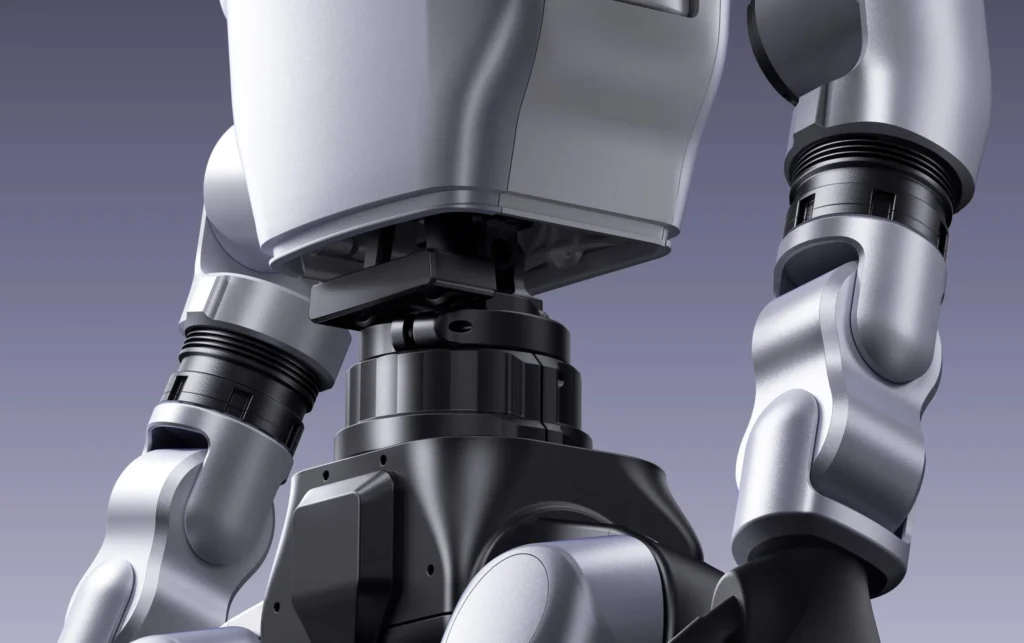
Not every Unitree G1 EDU includes dexterous hands or an NVIDIA Jetson Orin module: Unitree’s specification sheet lists both as optional, while US resellers bundle options into fixed tiers. The G1 EDU U1 lists at $43,900 and the U3 with two Dex3-1 hands at $65,900 at a US reseller (Source: RoboStore).
According to US reseller RoboStore’s configuration breakdown, the four main EDU tiers divide up the hardware options as follows:
- U1 EDU Standard ($43,900 reseller list price): Carries 23 total DoF, matching the joint count of the base G1, with a 1-DoF waist and no hands. It includes secondary development access, 120 N.m knee torque, 3 kg (6.6 lb) arm load, an 18-month warranty, and, per the reseller description, an NVIDIA Jetson Orin module rated at 100 TOPS.
- U2 EDU Plus ($53,900 reseller list price): Steps up to 28 total DoF, including a 3-DoF waist (1 standard plus 2 optional waist joints), while keeping the 100 TOPS Orin module per the reseller description. It does not include hands in the base U2 bundle.
- U3 EDU Ultimate A ($65,900 reseller list price): Expands to 42 total DoF by equipping two Dex3-1 force-controlled three-finger hands (7 DoF per hand). This tier also carries the 100 TOPS Orin module according to the reseller.
- U6 Ultimate D ($73,900 reseller list price): The highest-priced of RoboStore’s four EDU tiers; confirm its exact configuration with the reseller.
What you can and cannot do with the base G1
At $13,500 before tax and shipping, the base Unitree G1 costs less than a third of the entry-level EDU, which tempts many buyers to order it now and figure out the software later. That is an expensive mistake if your goal is engineering or research.
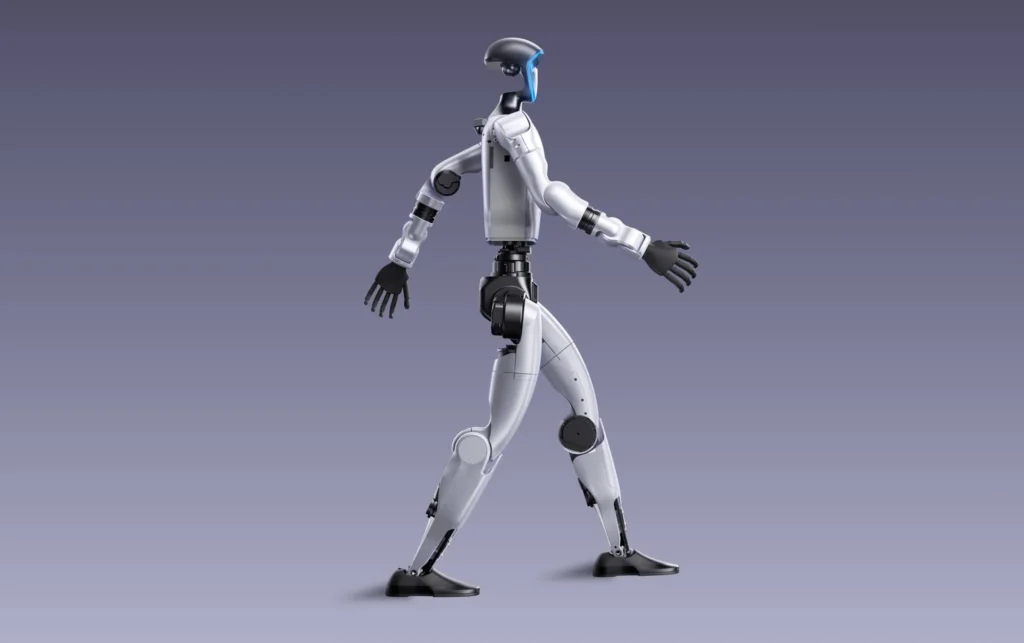
Because Unitree does not offer secondary development on the base model, you cannot use unitree_sdk2 to write custom locomotion controllers, integrate external vision models, or run university lab assignments. You also get no hands, and the warranty is 8 months instead of 18. Do not assume a base G1 can be upgraded into an EDU later: if you want to add hands or SDK access after purchase, confirm with the seller before buying.
Without developer access or hands, the base G1 is built for environments where the robot only needs to execute its built-in routines:
- Trade shows and corporate events: Standing 132 cm (4 ft 4 in) tall and weighing 35 kg (77 lb), it folds down to 69 cm (2 ft 3 in) for transport between venues.
- Public outreach and STEM demonstrations: Schools and museums that want to show students how a 23-DoF bipedal robot walks, balances, and responds to basic commands without touching C++ or Python code.
- Brand activations: Marketing teams looking for a shipping humanoid with about 2 hours of battery life to draw crowds on a stage or showroom floor.
If your team actually needs to write code, we track every programmable platform in our open SDK humanoid robots directory.
Cheaper and bigger alternatives
If $43,900 is over your lab’s budget, or if a 132 cm (4 ft 4 in) frame is too small for your task, four other shipping humanoids in our database offer different trade-offs in price, size, and development access.
Unitree Robotics
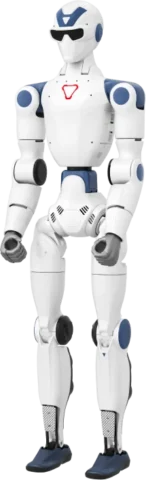
Unitree R1
- Height
- 123 cm
- Weight
- 29 kg
- DoF
- 26
- Runtime
- 1 h
Booster Robotics
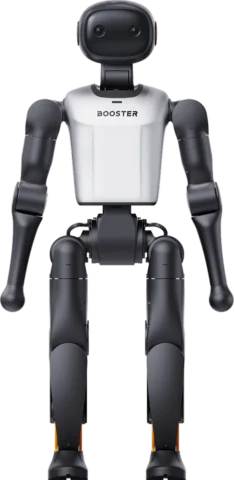
Booster K1 Geek Edition
- Height
- 95 cm
- Weight
- 19.5 kg
- DoF
- 22
- Runtime
- 18 min
| Robot | Price (USD) | Height (cm) | Development access |
|---|---|---|---|
| Unitree R1 | $5,900 (official MSRP; R1 EDU quote only) | 123 cm (4 ft) | R1 EDU only (not on base R1) |
| Booster K1 Geek Edition | $5,999 (official launch price) | ~95 cm (3 ft 1 in) | Yes (Python and C++ SDKs on all editions) |
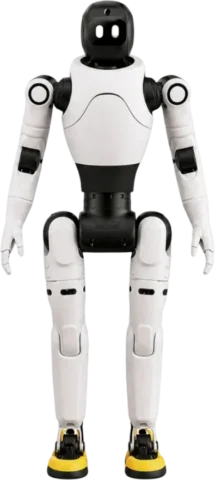
| AgiBot X2 | $33,259 (distributor list price, special order) | ~131 cm (4 ft 3 in) | Check with distributor |
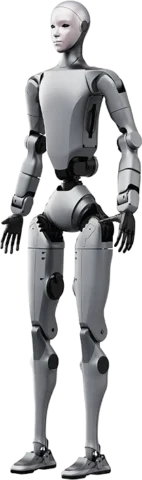
| Unitree H2 | $29,900 (official MSRP; H2 EDU quote only) | 182 cm (5 ft 11 in) | H2 EDU only (not on base H2) |
For buyers on a tight budget who still want a Unitree bipedal platform, the Unitree R1 lists at $5,900 official price (with an R1 AIR version at $4,900) and is listed as shipping in our database. However, just like the G1, Unitree offers secondary development only on the R1 EDU, which is priced at “Contact sales”. You can see how the two frames stack up in our Unitree G1 vs Unitree R1 comparison. If you want guaranteed SDK access under $6,000 without requesting an EDU quote, the Booster K1 Geek Edition launched in October 2025 at an official price of $5,999 (shipping, business-only). It is smaller at about 95 cm (3 ft 1 in), but it includes secondary development with Python and C++ SDKs on all editions.
In the same ~130 cm (4 ft 3 in) size class as the G1, the AgiBot X2 stands about 131 cm (4 ft 3 in) tall, weighs about 35 kg (77 lb), and features 25 DoF with about 2 hours of runtime. AgiBot publishes no official price, but our database tracks the AgiBot X2 at a distributor list price of $33,259 as a shipping special order. Finally, if you need an adult-sized platform, the Unitree H2 stands 182 cm (5 ft 11 in) tall, weighs about 70 kg (154 lb), carries 31 DoF, and runs for about 3 hours. Unitree lists the base H2 at $29,900 (shipping, business-only outside China), but again restricts secondary development to the quote-only H2 EDU. To see how these platforms rank for academic work, browse our best research humanoid robots list.
Which one should you choose
Deciding between the Unitree G1 vs G1 EDU—or walking away to buy a different platform entirely—depends on who will use the robot on day one:
- Events, outreach, and public demos: Buy the base Unitree G1 ($13,500 official MSRP). You get the same 132 cm (4 ft 4 in) body, 3D LiDAR, and 2-hour battery life as the EDU for less than a third of the price, and you will not miss the SDK.
- University labs and robotics researchers: Choose the Unitree G1 EDU. Pick the U1 Standard ($43,900 US reseller list price) if your lab only studies bipedal locomotion and whole-body control, or step up to the U3 Ultimate A ($65,900 US reseller list price) if your research requires manipulation with the two Dex3-1 force-controlled three-finger hands.
- Developers and makers on a strict budget: Skip the base G1 (since you cannot program it) and look at the Booster K1 Geek Edition ($5,999 official launch price), which includes Python and C++ SDK access out of the box, or request a quote from Unitree for the R1 EDU.
- Industrial pilots and full-size trials: If your task requires an adult-sized 182 cm (5 ft 11 in) frame and 3 hours of runtime, request a quote for the Unitree H2 EDU, or evaluate the G1 EDU U3 if a compact 35 kg (77 lb) frame with a 3 kg (6.6 lb) arm load fits your workstation.
Before placing an order or wiring a deposit to a distributor, review our step-by-step guide on how to buy a humanoid robot to check regional import duties, warranty terms, and business-only shipping rules, or line up these specs against every other shipping humanoid in our robot comparison tool.
Frequently asked questions
Can you program the base Unitree G1?
No, you cannot program the base Unitree G1 with custom code. Unitree marks secondary development as not offered on the $13,500 base G1 and restricts SDK access to the G1 EDU. While Unitree publishes the open-source unitree_sdk2 on GitHub for high-level and low-level control, you must purchase a G1 EDU tier to run custom software on the robot.
How much does the Unitree G1 EDU cost?
The Unitree G1 EDU has no official public list price from Unitree, which quotes the EDU on request. At US reseller RoboStore, the G1 EDU starts at a reseller list price of $43,900 for the U1 EDU Standard, rises to $53,900 for the U2 EDU Plus, $65,900 for the U3 EDU Ultimate A with hands, and reaches $73,900 for the U6 Ultimate D. In the EU, we estimate the U1 at about EUR 47,900 as a special order.
Does the Unitree G1 EDU come with hands?
Not every Unitree G1 EDU comes with hands. Unitree lists the 7-DoF Dex3-1 three-finger force-controlled hands as an optional upgrade on the G1 EDU rather than standard equipment. Read hand DoF separately from body DoF, as our guide to how humanoid robots work explains. When buying through US resellers, the entry-level U1 ($43,900) and U2 ($53,900) tiers ship without hands, while the U3 Ultimate A ($65,900 reseller list price) includes two Dex3-1 hands.
Does the Unitree G1 EDU include an NVIDIA Jetson Orin?
On Unitree’s official specification sheet, both the base G1 and the G1 EDU carry an 8-core high-performance CPU, and only the G1 EDU offers an optional high computing power module (“Orin, etc.”). In practice, US reseller RoboStore states that its U1, U2, and U3 EDU tiers carry an NVIDIA Jetson Orin module rated at 100 TOPS. Always confirm the exact compute module on your quote.
Is the battery life the same on the G1 and the G1 EDU?
Yes, battery life is the same on both the base Unitree G1 and the Unitree G1 EDU. Unitree equips both versions with the same quick-release 9,000 mAh battery, which provides about 2 hours of battery life. Both models also share the same weight of about 35 kg (77 lb) with the battery installed.
Robots in this guide
Live prices and status from our database.
 Unitree G1Unitree Robotics · China$13,500Official
 Unitree G1 EDUUnitree Robotics · China$43,900Reseller price
 Unitree R1Unitree Robotics · China$5,900Official
 Booster K1 Geek EditionBooster Robotics · China$5,999Official
 AgiBot X2AgiBot · China$33,259Reseller price
 Unitree H2Unitree Robotics · China$29,900Official
Sources
- heise online heise.de
- unitree_sdk2 on GitHub github.com
- RoboStore robostore.com