How do humanoid robots work? Parts, AI and specs explained
Humanoid robots combine joints, motors, sensors, batteries and AI. Learn what each part does and how to read DoF, battery and compute numbers on a spec sheet.
On this page 10
- How do humanoid robots walk and keep their balance?
- How humanoid robots work, in one minute
- The body: joints and degrees of freedom
- What moves the joints and fingers?
- How a humanoid senses the world and keeps its balance
- The brain: onboard compute, control layers and AI models
- Is a human driving the robot?
- How to read a humanoid robot spec sheet
- Frequently asked questions
- Bottom line
How do humanoid robots work? They combine five core systems: a jointed body (23 to 75 degrees of freedom on the robots in this guide), electric motors that drive the joints, sensors for balance and surroundings, onboard computers that turn camera data into motor commands, and a battery. Together, these systems let the machine walk, balance, and manipulate objects.
To see how humanoid robots work in practice, read their datasheets rather than their launch videos. Marketing clips often hide whether a machine is running autonomously or being steered by an off-screen human operator, and makers count basic specifications like joint totals and battery runtime in very different ways. At HumanRobots.si, we read every datasheet and normalize the numbers so you can compare humanoid robots side by side and tell a shipping product from a choreographed demo.
How do humanoid robots walk and keep their balance?
Humanoid robots walk and balance by continuously reading internal tilt sensors and joint encoders. A fast onboard control loop processes this state estimation data and continuously adjusts the torque of electric motors in the ankles, knees, hips, and waist to keep the robot’s center of mass stable over its feet.
How humanoid robots work, in one minute
Understanding how humanoid robots work requires looking at how hardware and software interact during a single step or grasp. Every machine in our database relies on the same fundamental loop: sense, plan, and act.
Here are the five main humanoid robot components and what each one does:
- The skeleton and joints: Rigid links or polymer structures connected by rotating and linear joints. Makers measure this flexibility in degrees of freedom (DoF), which is the number of independent axes the body and hands can move.
- The actuators (muscles): Current humanoids such as the Unitree G1, 1X NEO, and the electric Atlas use battery-powered electric motors, in some designs pulling tendon cables, to turn electrical energy into joint torque, measured in Newton-meters (N·m).
- The sensors (nervous system): An inertial measurement unit (IMU) tracks body tilt and acceleration, encoders measure the exact angle of every joint, and cameras (paired with 3D LiDAR on some models) map obstacles in the room.
- The onboard compute and AI (brain): Onboard processors increasingly run two software layers at once: a slow vision-language planner that decides what to do, and a fast whole-body controller that calculates motor commands to keep the robot upright.
- The power system: Rechargeable battery packs supply power; on the robots in this guide, maker claims range from about 1.5 hours (AgiBot A2 Ultra, walking) to 4 hours before a recharge or battery swap.
Because different buyers need different combinations of these parts, current machines vary widely in size, joint count, and price. You can see how tall each model stands next to you on our humanoid robot size comparison tool, or review the core specifications of seven current machines in the table below.
| Robot | Height (cm / ft) | Weight (kg / lb) | DoF (as listed) | Hands | Battery | Runtime (maker claim) | Compute | Status and price (as of November 5, 2026) |
|---|---|---|---|---|---|---|---|---|
| Unitree G1 | 132 cm (4 ft 4 in) | ~35 kg (77 lb) | 23 (23–43 on Unitree G1 EDU) | None on base; optional 7-DoF Dex3-1 on EDU | 9,000 mAh (13-cell), quick-release | ~2 hours (activity not stated) | 8-core CPU (NVIDIA Orin optional on EDU) | Shipping, $13,500 |
| Unitree H2 | 182 cm (~6 ft) | ~70 kg (154 lb) | 31 | None on base model | 0.972 kWh (15 Ah, 75.6 V max) | ~3 hours (activity not stated) | Not specified on base datasheet | Shipping, $29,900 |
| 1X NEO | 168 cm (5 ft 6 in) | 29.9 kg (66 lb) | 75 | 22 DoF per hand in the 75 total (1X’s hand post counts 25 with 3 wrist DoF) | 842 Wh | ~4 hours (activity not stated) | 1X NEO Cortex (NVIDIA Jetson Thor, up to 2,070 sparse FP4 TFLOPS) | Pre-order, $20,000 (Early Access price) |
| Boston Dynamics Atlas | 190 cm (6.2 ft) | 90 kg (198 lb) | 56 (hand inclusion not stated) | Not stated | Swappable pack (capacity not stated) | 4 hours (activity not stated) | Not specified | Pilot, price TBA |
| AgiBot A2 Ultra | 169 cm (5 ft 6.5 in) | ~69 kg (152 lb) | 40 | 6-DoF hands | 14.4 Ah | ~3 hours standing / 1.5+ hours walking | NVIDIA Jetson Orin 64 GB + 16-core CPU | Shipping, price on request |
| Pollen Robotics Reachy 2 | 136–166 cm (about 4 ft 6 in to 5 ft 5 in, adjustable) | Up to 50 kg (110 lb) | 7 per arm (total not listed) | Not stated | Not specified | Not specified | Open source (Apache 2.0), runs ROS 2 Humble | Shipping, price on request |
| Tesla Optimus Gen 2 | Not published | Not published | 28 body + 11 per hand (2022 prototype target) | 11 DoF per hand (2022 prototype target) | 2.3 kWh, 52 V (2022 prototype target) | Not published | Not published | Prototype, price TBA |
The body: joints and degrees of freedom
A humanoid robot’s mechanical structure mimics the human skeleton so it can use stairs, doorways, and workstations built for people. Engineers measure this mechanical flexibility using humanoid robot degrees of freedom (DoF). One degree of freedom equals one independent axis of motion. For example, bending an elbow up and down is one DoF, and rotating the forearm is a second DoF.
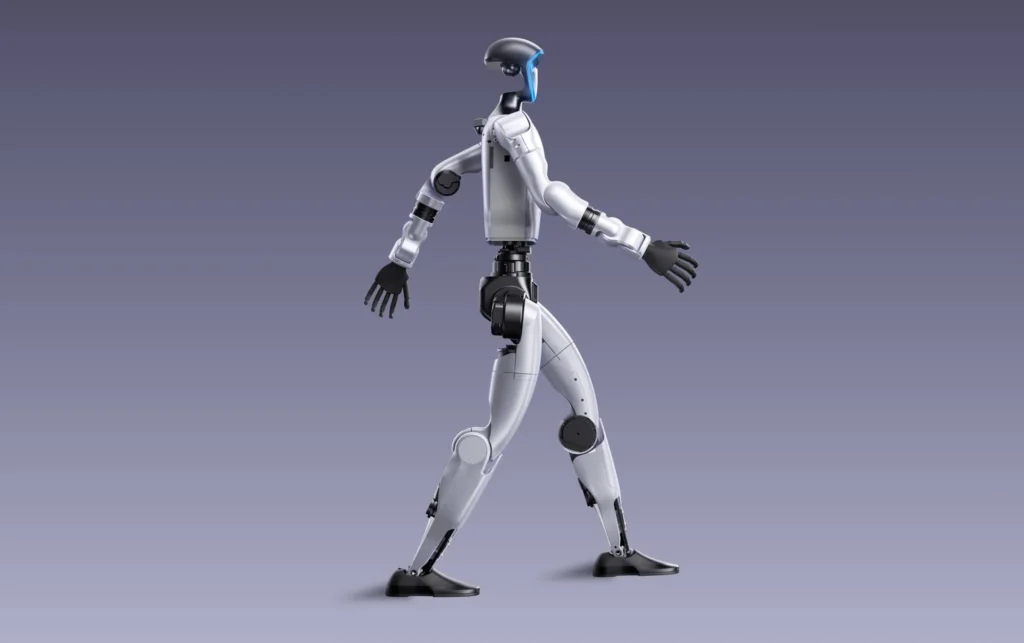
Unitree Robotics
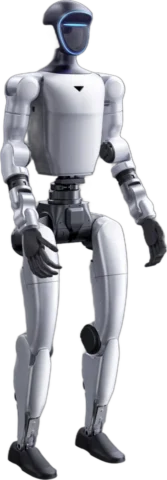
Unitree G1
- Height
- 132 cm
- Weight
- 35 kg
- DoF
- 23
- Runtime
- 2 h
1X Technologies
1X NEO
- Height
- 168 cm
- Weight
- 29.9 kg
- DoF
- 75
- Runtime
- 4 h
Total DoF is easy to misread because manufacturers do not count joints the same way. A maker can advertise a high total DoF when more than half of those joints are tiny finger motors inside the hands, while the torso and legs remain relatively stiff. Conversely, a base model might look limited on paper simply because the maker sells the hands as an optional upgrade. Our guide to robot hands and how to read their specs compares the hands of eight humanoids.
For example, Unitree lists the G1 at 23 DoF and G1 EDU at 23–43 DoF. On the base Unitree G1, those 23 degrees of freedom are split strictly across the body: 6 per leg, 5 per arm, and 1 in the waist, with no actuated hands at all. When you step up to the Unitree G1 EDU, Unitree adds 2 optional waist joints, 2 optional wrist joints, and optional Dex3-1 three-finger hands that have 7 DoF per hand (3 in the thumb, 2 in the index finger, and 2 in the middle finger).
Datasheets for larger machines follow the same pattern:
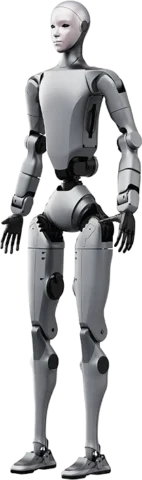
- Unitree H2: Unitree lists the 182 cm (about 6 ft) H2 at 31 DoF across the body (6 per leg, 7 per arm, 3 in the waist, and 2 in the head), with no hands included on the base model.
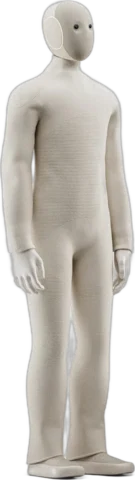
- 1X NEO: 1X lists 75 total DoF (maker claim) for its 168 cm (5 ft 6 in), 29.9 kg (66 lb) home humanoid. However, 44 of those 75 DoF are in the hands (22 per hand), leaving 31 DoF for the body: 6 per leg, 7 per arm, 3 in the neck, and 2 in the spine.
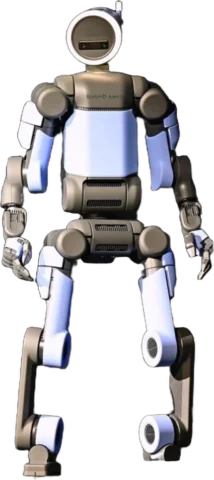
- Boston Dynamics Atlas: On the Boston Dynamics Atlas product page, the maker lists the 1.9 m (6.2 ft), 90 kg (198 lb) industrial robot at 56 DoF with a 2.3 m (7.5 ft) reach, without stating whether those 56 degrees of freedom include the hands.
- AgiBot A2 Ultra: AgiBot lists its 169 cm (5 ft 6.5 in), 69 kg (152 lb) machine at 40 total DoF, which includes 6-DoF hands.
- Tesla Optimus design targets: IEEE Spectrum reported on October 1, 2022 that Tesla’s AI Day 2022 Optimus design had 28 body DoF plus 11 DoF per hand (50 in total by our count); keep in mind these were first-prototype design targets, not published Tesla Optimus Gen 2 specs.
If your project involves picking up boxes or tools, always split the spec sheet into body DoF and hand DoF, and check our list of humanoid robots with dexterous hands to see what comes standard.
What moves the joints and fingers?
Once the skeleton is defined, the robot needs humanoid robot actuators: the motors, gears, and linkages that create physical movement. For decades, researchers debated whether heavy-duty humanoids should use pressurized fluid (hydraulics) or battery-powered electric motors. Boston Dynamics’ Atlas shows how that debate has shifted.
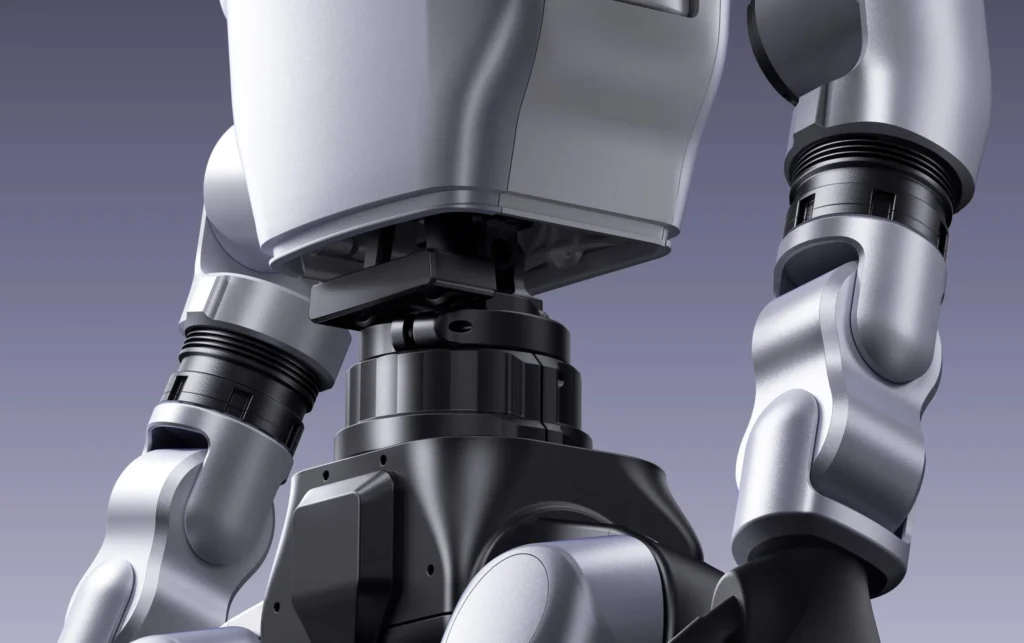
As IEEE Spectrum reported, Boston Dynamics retired the hydraulic Atlas on April 16, 2024 and introduced an all-electric Atlas powered by batteries and electric actuators the next day, April 17, 2024. According to Boston Dynamics, electric actuation was chosen to enable reduced complexity, quieter operation, and improved energy efficiency compared with the hydraulic Atlas. In its January 5, 2026 CES release, Boston Dynamics confirmed that Hyundai Mobis will supply the electric actuators for Atlas.
The robots in this guide use four main actuation designs, depending on whether the joint is a load-bearing knee or a delicate finger:
- Rotary PMSM joint motors: Rotary joints such as hips, knees, and shoulders are turned by electric motors; Unitree uses permanent-magnet synchronous motors (PMSM). Unitree says the G1 joints use low-inertia, high-speed internal-rotor PMSMs with crossed roller bearings, delivering a maximum knee torque of 90 N·m on the base G1 and 120 N·m on the G1 EDU. On the larger Unitree H2, PMSM joint motors push maximum leg torque to 360 N·m and arm torque to 120 N·m (maker spec, varying by configuration). In general, joints with low gear ratios are easier to backdrive, meaning an external push can turn the motor so the joint gives under an impact instead of resisting it rigidly.
- Linear actuators: Instead of spinning directly at the joint, a motor turns a screw mechanism that pushes and pulls a rod, similar to a human muscle pulling across a bone. In the 2022 Optimus prototype targets reported by IEEE Spectrum, Tesla combined 6 actuator types across the body: 3 rotary designs and 3 linear designs.
- Tendon-driven actuators: Putting a motor at every finger joint makes a hand bulky, so some makers place the motors in the forearm and run cables through the wrist. In a July 9, 2026 engineering post, 1X lists 25 DoF per NEO hand with tendon drive (22 in the fingers and palm plus 3 at the wrist), using forearm motors at about 5:1 to 15:1 gear ratios to generate a peak thumb torque of 3.5 N·m (maker claim). 1X also says NEO uses tendon-driven actuators and a soft body with a custom lattice polymer structure (maker claim).
- Parallel actuators: For smooth, multi-axis movement in joints like necks, wrists, and shoulders, some makers combine multiple motors acting together on a single joint. Pollen Robotics Reachy 2 uses Orbita parallel actuators to drive its 7-DoF arms, giving each arm a payload of about 3 kg (6.6 lb) (maker spec).
How a humanoid senses the world and keeps its balance
A two-legged machine cannot stay upright on its own. Unlike a wheeled warehouse robot, which stays upright when powered off, a bipedal humanoid must keep correcting its balance whenever it stands or walks. It does this by combining internal body sensors (proprioception) with external cameras and lasers (exteroception).
Balance starts inside the torso and joints. An inertial measurement unit (IMU), a microchip containing gyroscopes and accelerometers, measures the robot’s tilt, angular velocity, and linear acceleration. At the same time, joint encoders inside every motor housing report the exact angle and speed of the ankles, knees, hips, and arms, while force sensors in the feet or hands detect contact with the floor and objects. For instance, Unitree’s optional Dex3-1 hand for the G1 EDU is force-controlled and supports optional tactile arrays to feel grip pressure.
To navigate rooms and avoid collisions, humanoids layer vision and laser scanning in their heads and chests:
- 3D LiDAR and depth cameras: LiDAR spins or flashes laser beams to measure exact distances to walls and furniture, while RGB-D (color plus depth) cameras see close-up geometry for grasping. Unitree lists the G1 with a depth camera and 3D LiDAR (without naming the specific sensor models), and AgiBot equips the A2 Ultra with both 3D LiDAR and an RGB-D camera.
- High-frame-rate stereo vision: Some designs lean on wide-angle stereo cameras that mimic human eyes. 1X equips NEO with dual 8.85 MP stereo fisheye cameras running at 90 Hz (maker spec).
An onboard algorithm called state estimation fuses all of these sensor streams together. By combining IMU tilt data with joint encoder angles and visual landmarks, the robot calculates its exact center of mass and foot placement, feeding that state to the motor controllers to prevent falls.
The brain: onboard compute, control layers and AI models
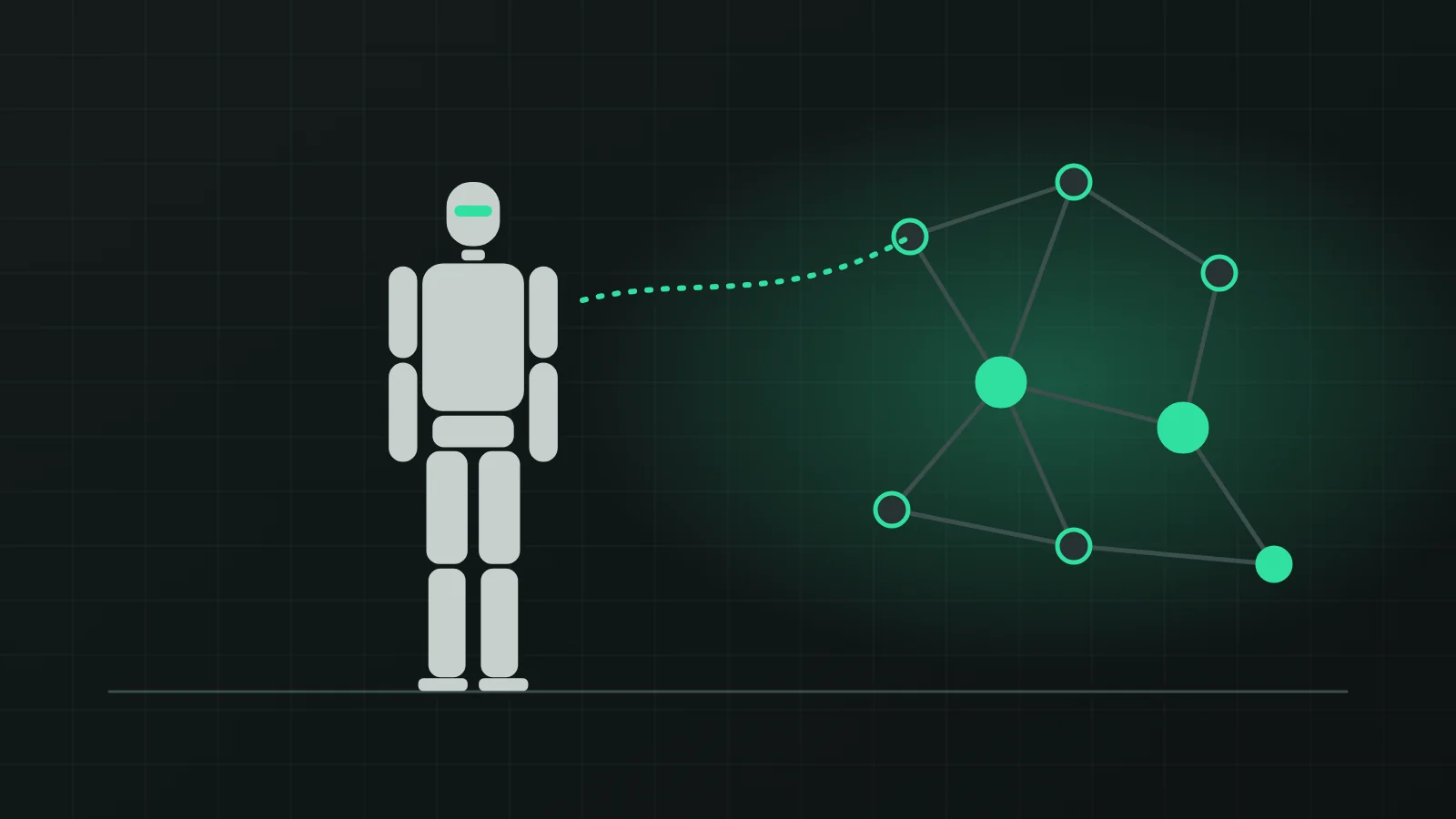
When people ask whether humanoid robots run on ChatGPT, they are really asking how high-level artificial intelligence connects to low-level motor control. A large language model takes too long to generate a response to stop a robot from tripping over a cable. To solve this, modern humanoids split their software into two distinct layers: a slow planner and a fast controller.
Vision-language-action (VLA) models are multimodal neural networks that process camera images and spoken or typed instructions to output physical robot movements directly. They bridge high-level semantic reasoning with low-level joint control so a humanoid can manipulate unfamiliar objects without hand-coded rules for every item.
In 2025, NVIDIA and Google DeepMind announced robot foundation models that take two approaches:
- System 2 (the slow planner) and System 1 (the fast action model): On March 18, 2025, NVIDIA announced Isaac GR00T N1 as an open humanoid robot foundation model built on a dual-system design. System 2 is a slower vision-language model that reasons about the environment and plans the task, while System 1 is a fast action model that translates that plan into continuous, precise motor movements.
- End-to-end VLA models: On March 12, 2025, Google DeepMind introduced Gemini Robotics, a vision-language-action model built on Gemini 2.0 that adds physical actions as a new output modality.
- Whole-body control and sim-to-real training: Underneath the AI planner sits the real-time whole-body controller, which continuously adjusts joint torques. Rather than programming walking equations by hand, engineers increasingly train these controllers using reinforcement learning and imitation learning inside GPU-accelerated physics simulators. NVIDIA’s Isaac Lab (released under a BSD-3-Clause license) lets developers train policies with GPU-accelerated physics and transfer them to physical hardware, a process called sim-to-real.
Running these neural networks without a tether takes a capable computer inside the robot. Unitree ships the base G1 with an 8-core CPU and offers NVIDIA Orin modules on the G1 EDU, while AgiBot equips the A2 Ultra with a 64 GB NVIDIA Jetson Orin board alongside a 16-core CPU board. For newer foundation models, 1X uses its NEO Cortex computer based on NVIDIA Jetson Thor. NVIDIA made Jetson Thor available on August 25, 2025 (with developer kits starting at $3,499), rating the module at up to 2,070 FP4 teraflops with 128 GB of memory in a 130 W power envelope, up to 7.5x the AI compute of Jetson Orin. Note that 2,070 TFLOPS is a sparse FP4 rating, so it is not directly comparable with dense floating-point figures. If you want to write your own control code, look at our directory of humanoid robots with an open SDK and check our robotics glossary for deeper definitions of compute metrics.
Is a human driving the robot?
Humanoid robot teleoperation is common, both as a training tool and as a way to get useful work done when autonomous AI falls short. Our guide to teleoperated robots compares how six humanoids use it. When you see a viral video of a humanoid folding laundry, sorting parts, or pouring drinks, ask whether the machine is acting on its own or mirroring a human wearing a virtual reality headset and motion-capture gloves.
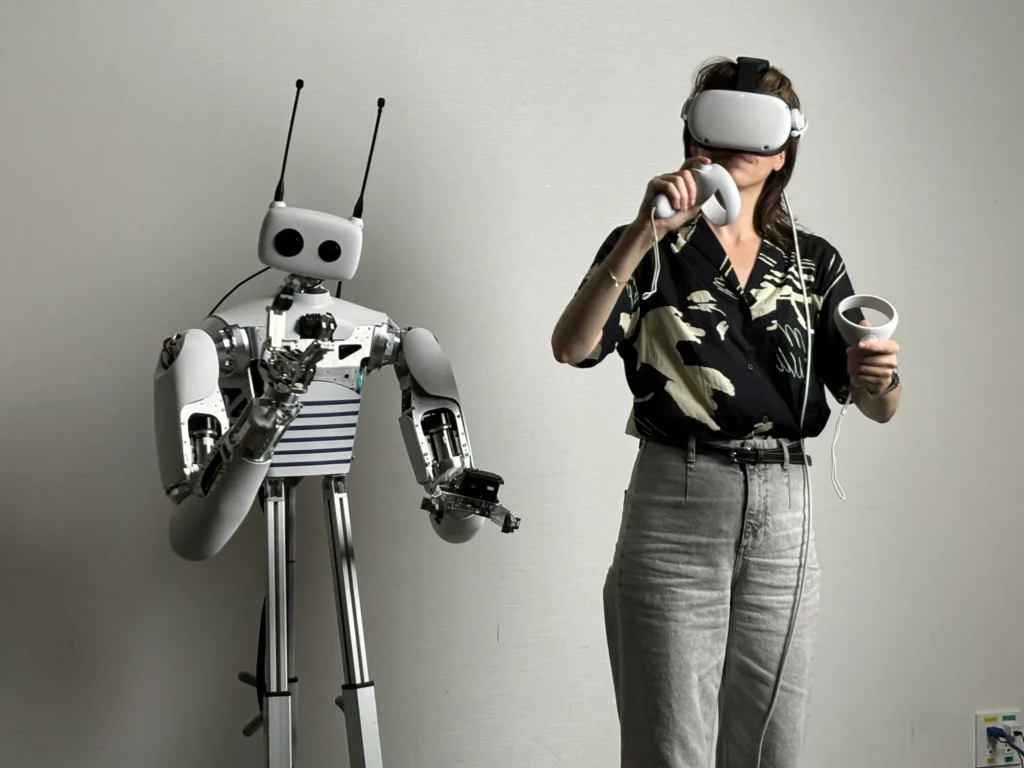
Teleoperation serves two distinct roles in how humanoids work. First, it is the primary way developers collect imitation learning data: a human teleoperates the robot through a task many times, recording the exact camera views and joint angles so the VLA model can learn to copy the behavior. For example, Pollen Robotics Reachy 2 (which is fully open source under Apache 2.0 and runs on ROS 2 Humble) natively supports VR teleoperation for research and data collection.
Second, makers openly build remote human control into commercial products as a fallback or operating mode, a concept known as shared autonomy:
- Industrial supervision and steering: In its January 5, 2026 CES release, Boston Dynamics stated that the electric Atlas can run in autonomous mode, teleoperated, or by using a tablet steering interface.
- Scheduled remote assistance at home: On the 1X NEO product page, 1X discloses that in NEO’s Expert Mode, an expert from 1X can remotely supervise the robot’s actions at scheduled times.
Because demos are not products, use this quick checklist whenever you evaluate a launch video or sales pitch:
- Look for off-screen operators or VR rigs: Does the maker state in the caption or footnote that the clip runs at real speed and shows autonomous operation, or was it teleoperated and sped up?
- Check the environment: Is the robot working at a named customer pilot site, or in a staged studio with high-contrast lighting and bolted-down tables?
- Ask about failure recovery: What happens when an item drops? If a human has to take over via remote desktop, ask how many robots one remote supervisor can manage at once, and what happens to camera privacy on your premises.
How to read a humanoid robot spec sheet
Marketing numbers rarely tell the full story. Battery figures show this best: every runtime figure in this guide is a maker claim, and only one maker here states the activity basis. AgiBot is that exception, listing the A2 Ultra at about 3 hours standing or 1.5+ hours walking from its 14.4 Ah battery. By contrast, Unitree claims about 2 hours for the G1 (9,000 mAh quick-release battery) and about 3 hours for the H2 (0.972 kWh, 15 Ah, 75.6 V maximum) without stating what the robot is doing. Similarly, 1X claims about 4 hours for NEO from its 842 Wh battery (with quick charging of about 6 minutes per hour of runtime), and Boston Dynamics claims 4 hours for Atlas. Boston Dynamics adds that Atlas walks to a charging station, swaps its own battery, and carries an IP67 rating for -20 to 40 °C (-4 to 104 °F).
Boston Dynamics
Boston Dynamics Atlas
- Height
- 190 cm
- Weight
- 90 kg
- DoF
- 56
- Runtime
- 4 h
Use this spec-sheet decoder table to see what each datasheet line item actually means for your lab, factory, or home.
| Spec on datasheet | What it tells you | What it hides | Who should care (lab, factory, home) |
|---|---|---|---|
| Total degrees of freedom (DoF) | The total number of motorized axes across the entire machine. | How those joints are split. A 75-DoF robot (like 1X NEO) may have 44 DoF in the hands, while a 23-DoF robot (base Unitree G1) has zero finger joints. | Lab & Factory: Check body DoF for mobility/reach, and hand DoF separately for grasping. |
| Peak joint torque (N·m) | The maximum rotational force the biggest motor (usually knee or hip) can briefly produce (e.g., 360 N·m on Unitree H2 legs). | Continuous torque before overheating, and actual arm payload at full reach (e.g., Reachy 2 lists ~3 kg (6.6 lb) per arm). | Factory: Critical for lifting boxes without thermal shutdown. Home: Ask how the maker handles contact with people (1X, for example, describes a soft body for NEO). |
| Battery capacity (Wh / Ah) & runtime | Energy stored in the pack and the maker’s best-case operating duration (about 1.5 to 4 hours among the robots in this guide). | The activity basis. Standing idle uses a fraction of the power of walking while carrying a load. Also hides whether batteries are hot-swappable. | Factory: Multi-shift pilots benefit from self-swapping (Atlas) or quick-release packs (G1). |
| Onboard compute (TFLOPS) | Raw AI math capacity of the internal board (e.g., Jetson Orin or Jetson Thor at 2,070 FP4 TFLOPS). | Precision and sparsity. Sparse FP4 ratings come out higher than dense figures for the same chip; also hides whether the SDK is open to buyers. | Lab: Essential if you run local VLA models or ROS 2 Humble. |
| Autonomy & control modes | Whether the robot supports autonomous policies, tablet steering, or VR teleoperation. | How much daily operation still relies on remote human supervisors (such as 1X Expert Mode). | Factory & Home: Determines network requirements, privacy rules, and hidden labor costs. |
Frequently asked questions
How many degrees of freedom does a humanoid robot need?
A humanoid robot has no fixed minimum number of degrees of freedom. The base Unitree G1 walks with 23 body DoF and no actuated hands. Hands add the most: Unitree’s optional Dex3-1 hand adds 7 DoF per hand on the G1 EDU, the AgiBot A2 Ultra’s 40 total includes 6-DoF hands, and 1X counts 22 DoF per hand in NEO’s 75 total.
Are humanoid robots remote controlled or autonomous?
Current humanoid robots use a mix of autonomous AI and human remote control depending on the task. For example, Boston Dynamics states that the electric Atlas can operate in autonomous mode, via a tablet steering interface, or through full teleoperation. Similarly, 1X discloses that its NEO home robot includes an Expert Mode where a remote 1X expert can supervise the robot’s actions at scheduled times.
What AI do humanoid robots use?
Humanoid robots use dual-layer AI systems rather than text-only chatbots. High-level planning relies on vision-language-action (VLA) and foundation models, such as NVIDIA Isaac GR00T N1 or Google DeepMind Gemini Robotics, which interpret camera feeds and voice commands. Low-level balance and joint movement are often handled by fast controllers trained with reinforcement learning in physics simulators like NVIDIA Isaac Lab.
How long do humanoid robot batteries last?
For the robots in this guide, maker battery claims range from about 1.5 to 4 hours per charge, and only AgiBot states the activity basis. Unitree claims about 2 hours for the G1 and 3 hours for the H2, while 1X and Boston Dynamics claim 4 hours for NEO and Atlas. AgiBot specifies that the A2 Ultra lasts about 3 hours while standing or over 1.5 hours while walking.
How do humanoid robots learn new tasks?
Humanoid robots learn new tasks through two primary methods: simulation training and human demonstrations. For walking and balance, engineers often use reinforcement learning in GPU-accelerated simulators like NVIDIA Isaac Lab, transferring the learned policy to the real robot (sim-to-real). For hand manipulation, operators control the robot via VR teleoperation so the onboard AI model can learn by imitating recorded human movements.
Bottom line
With these building blocks in mind, you can match the right architecture to your project instead of buying based on a launch video. If you are a university lab or developer, focus on body vs. hand DoF, open ROS 2 or SDK access, and onboard compute like NVIDIA Jetson Orin or Thor; start by checking our humanoid robots shipping now and our guide to humanoid robot prices and where to buy. If you are planning an industrial pilot or evaluating a home assistant, look closely at continuous payload, battery swap times, and how much the system relies on remote teleoperation. To weigh the exact specifications of your top candidates, put them side by side in our humanoid robot comparison tool.
Robots in this guide
Live prices and status from our database.
 Unitree G1Unitree Robotics · China$13,500Official
 Unitree G1 EDUUnitree Robotics · China$43,900Reseller price
 Unitree H2Unitree Robotics · China$29,900Official
 1X NEO1X Technologies · United States$20,000Official
 Boston Dynamics AtlasBoston Dynamics · United StatesTBANot announced
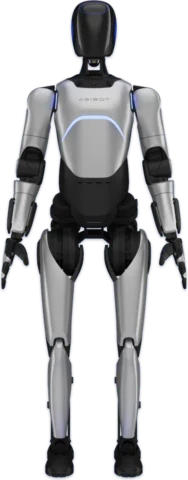 AgiBot A2 UltraAgiBot · ChinaOn requestQuote only
Sources
- Boston Dynamics Atlas product page bostondynamics.com
- IEEE Spectrum spectrum.ieee.org
- 1X lists 25 DoF per NEO hand with tendon drive 1x.tech
- NVIDIA announced Isaac GR00T N1 nvidianews.nvidia.com