How humanoids work Guide
Teleoperated robots: who really controls a humanoid?
Many humanoids blend autonomy with remote control. Learn the five control levels and what teleoperation means for home buyers, factory pilots and research labs.
On this page 8
- Is a humanoid robot autonomous or remote controlled?
- What is a teleoperated robot?
- The autonomy spectrum, from remote control to self-directed
- Why humanoid makers use teleoperation
- Which humanoid robots use teleoperation today?
- What teleoperation means for buyers, pilots and labs
- Frequently asked questions
- Bottom line
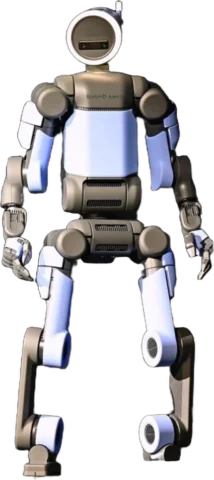
A teleoperated robot is controlled by a remote human, and many humanoid robots mix that remote control with autonomy, depending on the task. 1X says its 1X NEO home humanoid works autonomously by default, with scheduled remote 1X Expert sessions for unfamiliar chores. Boston Dynamics says its electric Atlas has three control modes: autonomous, teleoperated, or tablet-steered.
When you evaluate a teleoperated robot for a research lab, a factory pilot, or your home, you need to separate marketing videos from actual software capabilities. This analysis builds on our overview of how humanoid robots work by examining who—or what—is actually making the decisions inside the machine. Below, we break down the five levels of the autonomy spectrum, compare the exact control interfaces of six major humanoids, and outline what human-in-the-loop operation means for your privacy, staffing costs, and training data in 2026.
Is a humanoid robot autonomous or remote controlled?
The humanoids compared in this guide are not purely one or the other in 2026. Most rely on onboard AI for low-level balance and basic navigation, while using human teleoperation—remote control by a person using a headset, motion capture, or tablet—to handle unfamiliar manipulation tasks and collect training data.
What is a teleoperated robot?
A teleoperated robot is a machine controlled at a distance by a human operator who reads its camera and sensor feeds and sends movement commands back over a network. While the operator decides what the robot does, the robot’s onboard software usually handles balance, joint safety, and collision avoidance.
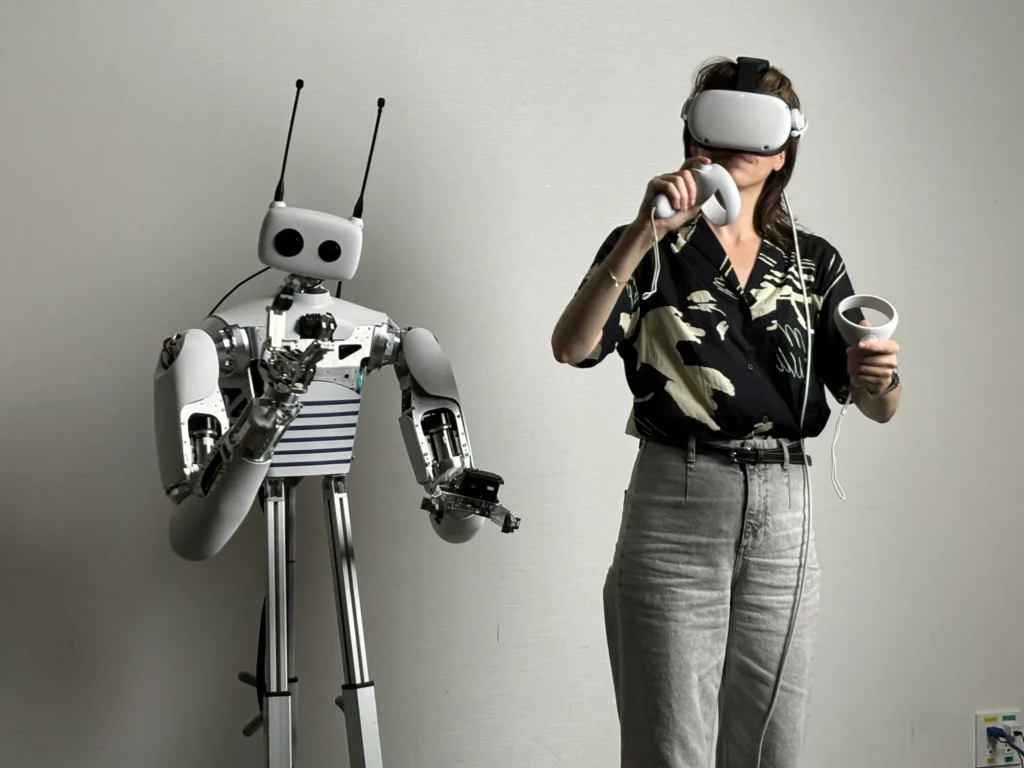
Historically, robot teleoperation was associated with surgical systems, underwater rovers, and bomb-disposal units, where a human steered the machine directly. In modern humanoid robot teleoperation, the architecture is split into two layers. The onboard computer runs a real-time control loop to keep the bipedal frame from falling over, while the human operator provides high-level body posture or hand trajectories from across the room—or across the globe.
Hardware makers use several interfaces to bridge the human and the machine:
- VR teleoperation: The operator wears an extended reality (XR) or virtual reality (VR) headset to see through the robot’s stereo cameras while holding hand controllers or using hand-tracking to guide the robot’s arms.
- Motion capture: The operator wears a body suit or external trackers so the robot mirrors their full-body posture in real time.
- Tablet or manual controllers: The operator uses a handheld joystick rig or touchscreen interface to trigger preset walking gaits or point-to-point actions.
Across all of these methods, the primary technical constraint is latency—the time delay between the operator’s physical movement and the robot’s mechanical response. High network latency makes fine manipulation difficult, which is why home and industrial humanoids increasingly hand routine motions over to onboard AI while keeping a human available for complex edge cases.
The autonomy spectrum, from remote control to self-directed
Humanoid robots do not fall into a simple binary of manual versus self-driving; instead, they sit on a spectrum from full teleoperation to full autonomy, which we split into five levels below. A single robot often shifts between these levels during the same work shift depending on whether it is walking, sorting known parts, or recovering from an error.
Shared autonomy is a control framework in which a human operator and an onboard AI system share control of a robot at the same time or by taking turns across subtasks. The robot executes routine actions—such as balancing, walking, or grasping a recognized object—on its own, while the human steps in for unfamiliar decisions or recoveries.
Beyond shared autonomy, industrial buyers frequently encounter supervised autonomy. Under supervised autonomy, the robot plans and executes its entire task independently, while a human monitors multiple feeds and only intervenes to approve a plan or clear a fault. To help buyers compare claims, we categorize humanoid control into five distinct levels based on verified maker documentation and press reports.
| Control level | How the robot and human split the work | Documented humanoid example |
|---|---|---|
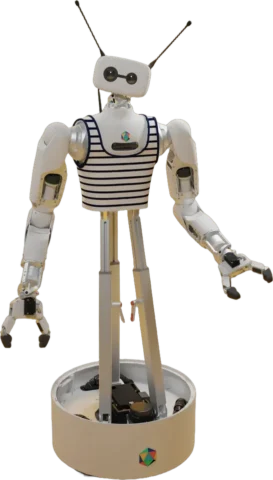
| 1. Full teleoperation | The human operator directly controls upper-body and hand movements in real time through a VR headset or rig, while the robot mirrors the pose. | Pollen Robotics Reachy 2 (using its VR teleoperation app over Oculus Link to see through the robot’s eyes and control its arms). |
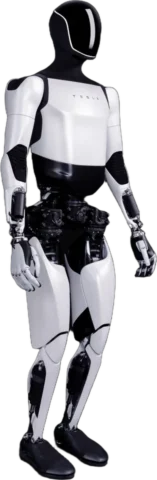
| 2. Assisted teleoperation | The robot uses onboard AI to balance and walk on its own, while a remote human operator controls upper-body interactions or speech. | Tesla Optimus Gen 2 (TechCrunch, citing Bloomberg and The Verge, reported that at the October 10, 2024 We, Robot event the robots walked using AI while humans remotely operated many attendee interactions; not confirmed by Tesla). |
| 3. Shared autonomy (Expert takeover) | The robot handles known, basic tasks autonomously by default, but a remote human operator takes over at scheduled times or for unfamiliar chores. | 1X NEO (1X states NEO works autonomously by default and lets owners schedule a 1X Expert to remotely supervise and guide unknown chores). |
| 4. Supervised autonomy | The robot executes tasks autonomously while a human supervisor monitors status and steers high-level goals via a screen or tablet. | Boston Dynamics Atlas (Boston Dynamics lists a tablet steering interface alongside autonomous and teleoperated modes; placing it at this level is our reading, not a maker classification). |
| 5. Full autonomy | The robot perceives, plans, and completes the entire task using an onboard neural network policy without human intervention. | Boston Dynamics Atlas and 1X NEO (Boston Dynamics lists autonomous mode as one of three Atlas control modes; 1X says NEO works autonomously by default and calls its Early Access autonomy foundational). |
Why humanoid makers use teleoperation
Robotics companies use teleoperation for two distinct reasons: to let a deployed robot finish tasks its AI cannot yet handle alone, and to record human demonstrations that train the robot’s neural networks. Every hour a human pilots a humanoid can generate sensor-and-action recordings that teach the robot how to perform that same chore autonomously later.
Unlike large language models, which train on huge collections of existing web text, physical robots have no pre-existing internet dataset of how to fold a shirt or load a die-casting machine. Engineers solve this through imitation learning—a training method where a machine learns a policy (the AI model that maps camera and joint inputs to motor commands) by copying recorded human demonstrations.
Research labs have shown that robots can learn fine skills from small amounts of teleoperation data. For fine manipulation, the ALOHA paper reports 80 to 90 percent success on six bimanual tasks learned from 10 minutes of teleoperated demonstrations (Source: arXiv 2304.13705). Building on that work, Stanford researchers introduced the Mobile ALOHA whole-body teleoperation interface, which learns mobile bimanual tasks from 50 demonstrations and reports that co-training with static ALOHA data can increase success rates by up to 90 percent (Source: arXiv 2401.02117).
To turn these lab methods into commercial general-purpose policies, manufacturers run large data-collection facilities. For example, the AgiBot World dataset holds 2,976.4 hours and over 1 million trajectories across 217 tasks, collected by teleoperation on 100 dual-arm humanoid robots. The data was recorded in a facility of over 4,000 square meters (over 43,000 sq ft) using VR headset control and whole-body motion capture (Source: arXiv 2503.06669). Similarly, in a September 21, 2026 announcement, Boston Dynamics showed a trainer teleoperating the electric Atlas at the Robotics Metaplant Application Center (RMAC), stating it aims to scale data collection and other tasks to continue Atlas training in 2027.
Which humanoid robots use teleoperation today?
Each of the six humanoids below has documented or reported teleoperation, whether as a customer-facing feature, a control mode, a research tool, or, in Tesla’s case, a reported event demonstration. Below is how six widely tracked humanoids—1X NEO, Boston Dynamics Atlas, Tesla Optimus, Pollen Robotics Reachy 2, and the Unitree G1 and Unitree G1 EDU—use remote human control according to official documentation and verified reports.
1X Technologies
1X NEO
- Height
- 168 cm
- Weight
- 29.9 kg
- DoF
- 75
- Runtime
- 4 h
Pollen Robotics
Pollen Robotics Reachy 2
- Height
- 166 cm
- Weight
- 50 kg
- DoF
- 21
- Runtime
- 8 h
Unitree Robotics
Unitree G1 EDU
- Height
- 132 cm
- Weight
- 35 kg
- DoF
- 23
- Runtime
- 2 h
When reviewing these platforms, pay close attention to our status labels. In our database, a robot is listed as a prototype if it exists only as working units shown in the maker’s lab or at maker events, pilot if units work with selected customers but are not sold to the public, pre-order if the public can place a deposit, and shipping if buyers can order and receive it today.
| Robot | Status (maker price, USD) | Teleoperation interface | Main use of teleoperation | Source of the claim |
|---|---|---|---|---|
| 1X NEO | Pre-order ($20,000 maker price or $499/month subscription; $200 refundable deposit) | Mobile app and VR device (for owners); Not disclosed (for 1X Experts) | Scheduled 1X Expert sessions to guide unknown chores; direct owner remote piloting from anywhere in the world | 1X NEO product page and Order page (maker claims); The Robot Report (press-reported features) |
| Boston Dynamics Atlas | Pilot (Boston Dynamics says all 2026 deployments are committed, with fleets going to Hyundai RMAC and Google DeepMind; more customers planned in early 2027) | Teleoperation (interface not disclosed) and tablet steering interface | One of three official operational control modes alongside autonomous mode; trainer data collection at RMAC to scale manufacturing task training | Boston Dynamics CES 2026 release and RMAC opening news (maker statements) |
| Tesla Optimus Gen 2 | Prototype | Not disclosed by maker (remotely operated by humans at October 2024 event, per press reports) | Handling attendee interactions and serving drinks at the October 10, 2024 We, Robot showcase while walking via onboard AI | TechCrunch, citing Bloomberg and The Verge (reported, not confirmed by Tesla) |
| Pollen Robotics Reachy 2 | Shipping (price on request in our database) | VR teleoperation app tested with Meta Quest 2 and Meta Quest 3 over Oculus Link (requires VR-capable PC and broadband; wired ethernet recommended) | Letting operators see through the robot’s eyes for remote manipulation, research demonstrations, and open-source AI development | Pollen Robotics documentation and Hugging Face blog (maker statements) |
| Unitree G1 | Shipping ($13,500 maker price before tax and shipping) | Manual controller included; official Unitree xr_teleoperate software supports Apple Vision Pro, PICO 4 Ultra Enterprise, and Meta Quest 3 | Direct remote control and recording trajectories for imitation learning | Unitree G1 product page and Unitree GitHub (maker pricing and software) |
| Unitree G1 EDU | Shipping ($43,900 in our database; sold through Unitree sales) | Manual controller included; open SDK and official xr_teleoperate XR headset software | Research data collection, custom imitation learning pipelines, and bimanual teleoperation | Unitree G1 product page, GitHub, and HumanRobots.si database |
The distinction between a public product feature and an event showcase matters here. For 1X NEO, remote human assistance is explicitly built into the consumer product model: 1X stated at launch on October 28, 2025, that NEO arrives with foundational autonomy for basic tasks and that owners can schedule a 1X Expert to guide it through chores it does not yet know. By contrast, when TechCrunch (citing Bloomberg and The Verge) reported that Tesla Optimus units at the October 10, 2024 We, Robot event were remotely operated by humans for many attendee interactions while walking with AI, that described an undisclosed event demonstration rather than a shipping specification.
What teleoperation means for buyers, pilots and labs
Whether teleoperation is a benefit or a liability depends on what you are buying the robot to do. For a consumer, remote operation raises immediate questions about camera privacy in the home (see our household robot guide); for a factory manager, it means human operator wages remain part of the deployment cost; and for an AI researcher, a low-latency teleoperation stack is a key tool for recording training datasets.

Privacy at home
If you are evaluating home humanoid robots, a teleoperated or Expert-assisted model means a remote human can see through the robot’s cameras during an active support session. So is 1X NEO teleoperated? The answer depends on how 1X structures its Early Access program. 1X says NEO works autonomously by default, while complex, unlearned tasks can be supervised remotely by a 1X Expert at scheduled times—or piloted by the owner themselves via a mobile app and VR device. On April 30, 2026, 1X stated that current NEO units were prioritized for its internal team to test in homes. It said some buyers would get NEO in 2026 and some later, and that capacity would reach up to 10,000 NEOs per year once its Hayward and San Carlos sites are online (maker claim). At launch, 1X said 2026 deliveries go primarily to the US, with other markets starting in 2027.
To address household privacy, The Robot Report reported in October 2025 that NEO owners can blur the faces of people the robot interacts with and set physical no-go zones where the robot will never enter, alongside scheduling when a 1X teleoperator connects. Because those privacy features are press-reported, early buyers should verify the exact software terms, video retention rules, and encryption standards in their purchase agreement before taking delivery.
Labor and scale in factory pilots
For logistics and manufacturing teams planning a pilot, teleoperation directly affects your return on investment and regulatory compliance. Our guide to humanoid robots in factories and warehouses shows which deployments are pilots and which are in production. Boston Dynamics states that its electric Atlas can run in autonomous mode, be teleoperated, or be steered with a tablet interface (Source: Boston Dynamics). While an autonomous humanoid robot is the end goal for factory buyers, early industrial deployments use teleoperation to collect training data, as Boston Dynamics has shown with a trainer teleoperating Atlas at RMAC. If a vendor’s robot requires frequent remote human intervention, you are not replacing labor hours one-for-one; you are shifting floor work to remote supervision hours.
European companies should also track binding safety law. The European Commission states that the EU Machinery Regulation (EU) 2023/1230 applies on a mandatory basis from January 20, 2027, covering AI-powered safety functions. The regulation formally defines a “supervisor” as a person responsible for supervising autonomous mobile machinery and requires a supervisory function that lets that supervisor remotely receive information from the machine. If you plan an EU deployment, ask the vendor how its humanoid and remote-operation setup will meet the regulation once it applies.
Data collection for research
For university labs and corporate AI teams, teleoperation is not a fallback—it is the primary feature you use to collect imitation learning trajectories. If you need a programmable platform from our open-SDK humanoid robots list, the software stack matters as much as the actuators. Unitree’s official xr_teleoperate repository (release v1.6 dated July 29, 2026) supports the G1 in its 29 and 23 degrees of freedom (DoF) versions, plus the H1, H1_2, H2, and R1. DoF is the number of joints a robot can move. The software works with Apple Vision Pro, PICO 4 Ultra Enterprise, and Meta Quest 3 headsets and includes a record option that saves trajectories for imitation learning. Because secondary development requires open SDK access, labs should review our Unitree G1 vs G1 EDU comparison before ordering.
If your lab focuses on upper-body manipulation and human-robot interaction, Pollen Robotics’ open-source Reachy 2 offers an official VR teleoperation app.
Questions to ask a vendor
Before you put down a deposit on a home robot or sign an industrial pilot contract, ask the manufacturer to answer four specific questions in writing, and look closely at how their launch videos are filmed:
- When does a human take over? Ask which specific subtasks run on an onboard policy today and which trigger a remote human operator or supervisor.
- Where are the operators located, and how are they vetted? Confirm whether teleoperators are background-checked employees or third-party contractors, and which jurisdiction’s data laws apply to them.
- Is camera and microphone data stored for AI training? Ask whether video from your home or factory floor is uploaded to train the vendor’s global foundation model, and whether faces or proprietary tooling are masked before upload.
- Can you opt out of remote connectivity? Verify if the robot can run on a local network with remote teleoperation completely disabled, and what capabilities stop working if you turn it off.
When you watch a humanoid demo video online, apply the same analytical filter. Check whether the caption states “autonomous” or “1x speed,” watch for human operators standing just off-camera wearing VR headsets or motion-capture gloves, and look for sudden pauses before complex grasps that can indicate network latency or a human operator lining up a view. Above all, look for repeated, unedited runs of the same task rather than a single highlight clip.
Frequently asked questions
Is 1X NEO controlled by a human?
1X says the 1X NEO humanoid works autonomously by default for basic tasks and uses human remote supervision for complex chores it does not yet know. NEO is listed at $20,000 for Early Access ownership, with US deliveries starting in 2026, or $499 per month on a subscription that ships later. Owners can schedule a 1X Expert to remotely guide NEO through unfamiliar tasks, or pilot NEO themselves from anywhere using the mobile app and a VR device.
Can a teleoperator see inside my home?
Yes, when a remote operator guides a home humanoid robot, they view the feed from the robot’s cameras to navigate and manipulate objects. For the 1X NEO, The Robot Report reported that owners can schedule when a 1X teleoperator connects, set physical no-go zones where NEO will never enter, and enable automatic face blurring for people the robot interacts with.
Was Tesla Optimus remote controlled at We, Robot?
TechCrunch reported, citing Bloomberg and The Verge, that Tesla Optimus robots at the October 10, 2024 We, Robot event were remotely operated by humans for many interactions with attendees, while walking without external control using onboard AI. According to those reports, one Optimus bartender said it was assisted by a human, though Tesla did not officially confirm the teleoperation details.
Why do robot companies use teleoperation?
Robot companies use teleoperation both to complete real-world tasks that onboard AI cannot yet handle reliably and to collect training data for imitation learning. By recording a human operator’s camera views and joint movements via VR headsets or motion-capture suits, engineers gather demonstrations—such as the 2,976.4 hours recorded in the AgiBot World dataset—to train autonomous neural network policies.
What is shared autonomy?
Shared autonomy is a robot control method where an onboard AI system and a human operator divide the work of completing a task. In humanoid robotics, the onboard software typically handles continuous low-level balance, walking, and familiar object grasps, while a remote human operator steps in to make high-level decisions, guide unfamiliar chores, or recover from errors.
Can I teleoperate my own humanoid robot?
Yes, several humanoids offer owner or developer teleoperation tools. 1X says owners of NEO, currently on pre-order, can pilot their robot via a mobile app and VR device. For developers, the Unitree G1 ($13,500) and G1 EDU ($43,900) support Unitree’s official xr_teleoperate software for Apple Vision Pro, PICO 4 Ultra Enterprise, and Meta Quest 3, while Pollen Robotics’ Reachy 2 supports Meta Quest 2 and 3 over Oculus Link.
Bottom line
A teleoperated robot is not a trick or a failed product; in 2026, human-in-the-loop control is the bridge that lets humanoid robots do useful work while gathering the demonstrations needed to make them autonomous. The right decision depends on how you plan to use the machine:
- Home buyers: Treat early consumer humanoids like the 1X NEO ($20,000 or $499/month pre-order) as shared-autonomy appliances. Only place a deposit if you are comfortable scheduling remote 1X Expert sessions in your home and have verified how no-go zones and face blurring work in practice.
- Companies planning a factory pilot: Ask vendors for task-by-task autonomy metrics before signing, include remote supervisor wages in your cost model, and, for European deployments, ask how the vendor will meet the EU Machinery Regulation, which applies from January 20, 2027.
- Research labs and developers: Prioritize platforms with documented, low-latency XR teleoperation and recording pipelines, such as the shipping Unitree G1 EDU ($43,900) with
xr_teleoperateor Pollen Robotics Reachy 2.
Ready to evaluate specs, pricing, and availability across every model we track? Compare the robots side by side on our humanoid comparison tool.
Robots in this guide
Live prices and status from our database.
 1X NEO1X Technologies · United States$20,000Official
 Boston Dynamics AtlasBoston Dynamics · United StatesTBANot announced
 Pollen Robotics Reachy 2Pollen Robotics · FranceOn requestQuote only
 Tesla Optimus Gen 2Tesla · United StatesTBANot announced
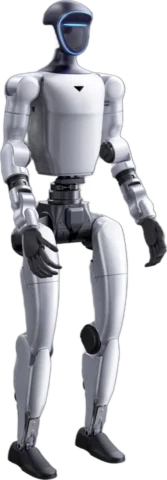 Unitree G1Unitree Robotics · China$13,500Official
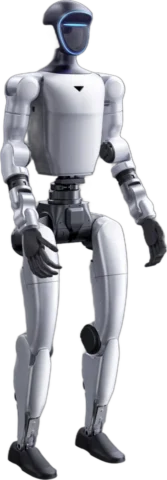 Unitree G1 EDUUnitree Robotics · China$43,900Reseller price
Sources
- arXiv 2304.13705 arxiv.org
- arXiv 2401.02117 arxiv.org
- arXiv 2503.06669 arxiv.org
- 1X NEO product page 1x.tech
- Unitree GitHub github.com
- Boston Dynamics bostondynamics.com