How humanoids work Guide
Robot hands explained: how humanoid hands compare
Only 17 of the 42 humanoids we track have dexterous hands. How to read DoF, drive, touch and grip specs, for lab buyers, pilot planners and home buyers.
On this page 8
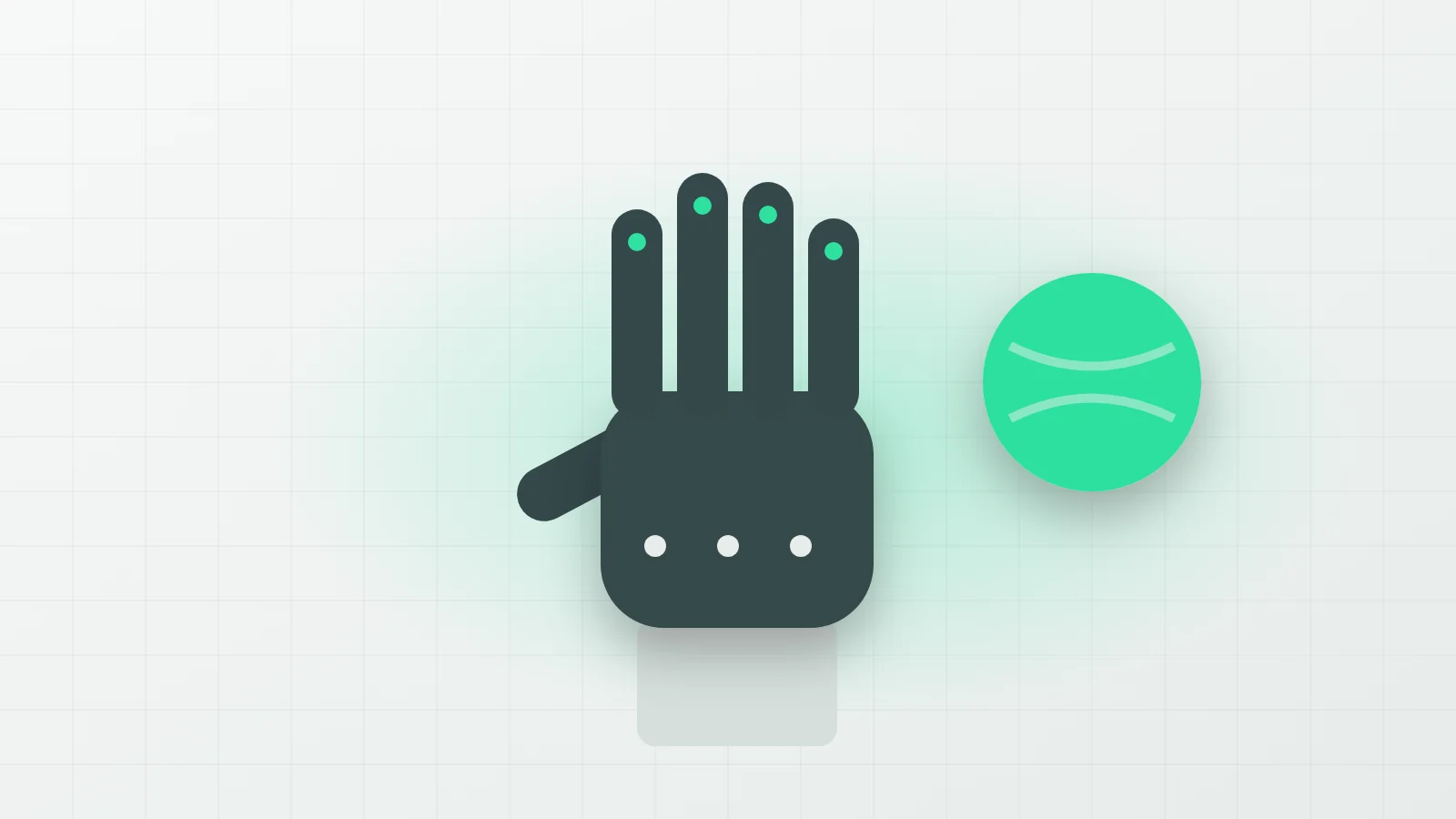
A robot hand is the mechanical end-effector that lets a humanoid grasp, hold and manipulate objects. Only 17 of the 42 humanoids in the HumanRobots.si database carry dexterous hands, with 4 to 22 degrees of freedom per hand where makers publish a figure; the rest have simple grippers or no actuated hands, some with dexterous hands sold as an option.
Reading a humanoid datasheet requires separating wrist joints from finger joints, distinguishing fingertip force from whole-arm payload, and checking whether a hand is included in the base price. It builds on our overview of how humanoid robots work and gives you a method to check any maker spec before you buy or plan a pilot.
What is a dexterous robot hand?
A dexterous robot hand is a multi-fingered robotic end-effector with independently actuated finger joints, often paired with tactile sensors, that can grasp and manipulate objects of varied shapes. Unlike a single-axis gripper that only opens and closes, a dexterous hand controls finger posture, thumb opposition and contact force through several independently actuated joints.
How does a robot hand work?
A robotic hand works by combining a mechanical skeleton of links and hinges with electric actuators, transmissions and force sensors to turn software commands into controlled finger movements.
Four subsystems determine what the hand can actually do in a lab or warehouse:
- Joints and links: The mechanical hinges that set how each finger bends, curls and spreads sideways (abduction and adduction).
- Actuators and transmissions: Electric motors that drive the joints either directly inside the fingers or remotely through cables and gears.
- Tactile and position sensors: Encoders that track joint angles alongside pressure arrays on the fingertips and palm that detect when the hand makes contact or when an object starts to slip.
- Control software: The low-level loops and AI policies that translate a grasp target into exact motor torques without crushing the object.
Not every hand shown in a launch photo is an active manipulator. Some commercial humanoids ship with fixed, non-actuated dummy hands and sell the working multi-fingered hand as a separate option, sometimes without a published price.
What “DoF per hand” really means
A degree of freedom (DoF), the number of independent directions a joint or mechanism can move, is the headline number on every hand datasheet. A peer-reviewed 2026 review says the human hand has 27 bones, 36 articulations and 39 active muscles and is commonly represented by about 20–27 functional degrees of freedom, depending on the kinematic model (Source: Krzus 2026).
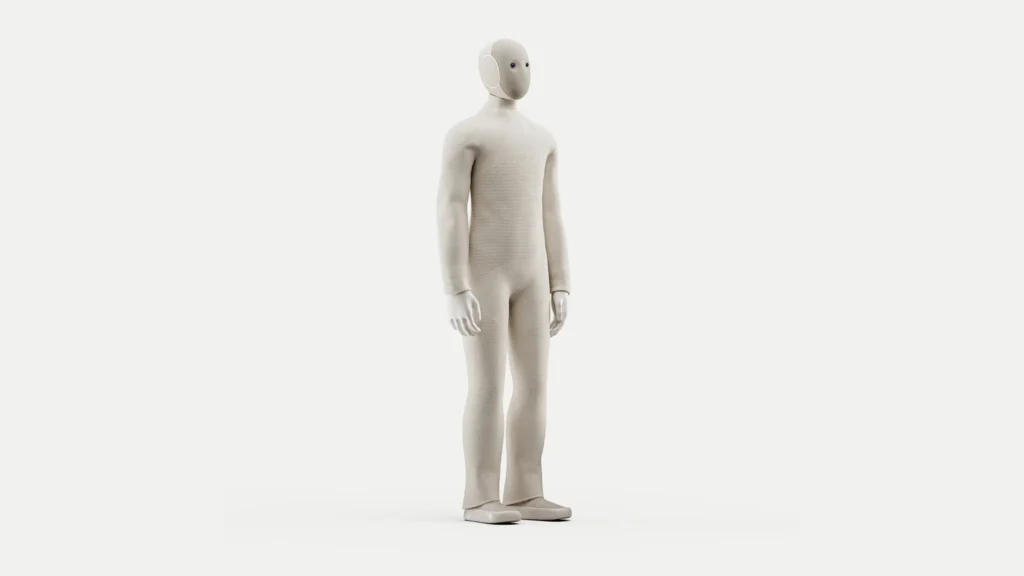
Comparing DoF across robot makers is difficult because companies count joints differently. Take the 1X NEO, a pre-order robot with a $20,000 Early Access maker price and 75 DoF in total. 1X says NEO has 25-DoF tendon-driven hands: 22 fully actuated DoF in the fingers and palm plus 3 at the wrist (Source: 1X). In the HumanRobots.si database, we list NEO at 22 DoF per hand (fingers and palm) and count the three wrist joints with the arm, so you can compare finger and palm joints directly.
Other makers use fewer fingers. For the Boston Dynamics Atlas, which is in pilot deployments with no published price and 56 DoF in total, Boston Dynamics says the new Atlas hand moved from the previous 7-DoF hand to four fingers with 13 DoF in total: a 4-DoF opposable thumb plus 3 DoF per finger, with no little finger, which saved three actuators along with their cost, volume and chance of breaking.
When you read any manufacturer spec sheet, run through these five questions:
- Are wrist joints included in the hand DoF count? If so, subtract them before comparing finger dexterity with another robot; 1X, for example, includes 3 wrist DoF in its 25-DoF NEO hand figure.
- How many joints are independently actuated versus passively coupled? A finger with three hinges driven by a single motor and a linkage has one active DoF, not three.
- How many fingers does the hand use?
- Are the hands standard equipment or an optional upgrade? Check whether the base robot ships with non-actuated dummy hands.
- Is the hand shown working autonomously or under teleoperation? A teleoperated demo shows what the hardware can do under human control, not what the robot can do on its own.
Tendon or direct drive: why actuation matters
Once a maker chooses a joint count, they must decide where to put the motors. An academic preprint (Li et al., arXiv, April 2026, not peer-reviewed) notes that motors placed inside the hand add end-effector mass, take up space and build heat near the hand, whereas remote tendon actuation moves the motors away at the cost of friction losses in the tendon sheath.
Tendon-driven designs place the actuators in the forearm and pull the fingers through cables, much like human muscles and tendons. To keep the forearm light, engineers pair small motors with gearing. The gear ratio, the number of times a motor shaft spins for one turn of the joint, multiplies output torque while reducing speed. According to 1X, the NEO hand uses the 1X Tendon Drive at about 5:1 to 15:1 gear ratios and is sealed to IP68, which 1X says lets the hand work at the sink and be washed when dirty.
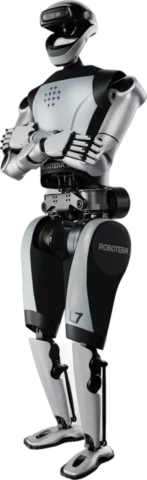
Direct-drive and in-hand geared designs take the opposite path, placing actuators directly inside the palm and phalanges to eliminate cable stretch and sheath friction. Boston Dynamics says the new Atlas hand joints are directly actuated by one backdrivable, fully encapsulated actuator type. Backdrivability means an external force can push a joint back through its transmission; Boston Dynamics says it supports the robot’s sense of its own joint positions and forces and helps protect the gearbox during hard impacts. Similarly, ROBOTERA says XHAND1, fitted to the shipping ROBOTERA L7 (55 DoF in total, price on request), is a fully direct-drive, five-fingered dexterous hand with 12 active degrees of freedom. Hybrid layouts also exist: on the optional Dex3-1 hand for the Unitree G1 EDU, Unitree says 6 motors drive directly and 1 drives through gears.
Touch, grip force and payload are different numbers
Tactile sensors on a humanoid hand can report three different things: normal force (how hard the finger presses straight down), shear force (sideways tug that indicates an object is starting to slip) and contact location (where on the pad the object touches). 1X says the NEO hand senses normal force, contact location and shear, while Boston Dynamics equips the Atlas hand with dense pressure tactile sensors on the fingertips and palm (Source: Boston Dynamics).
Force and load numbers on datasheets require even closer reading because manufacturers mix three different metrics:
- Fingertip force and joint torque (N or Nm): How hard a single finger segment can push or curl. 1X claims the NEO hand reaches up to 45 N distal flexion force, 2.6 Nm at the finger MCP (knuckle) joints and 3.5 Nm at the thumb CMC (base) joint.
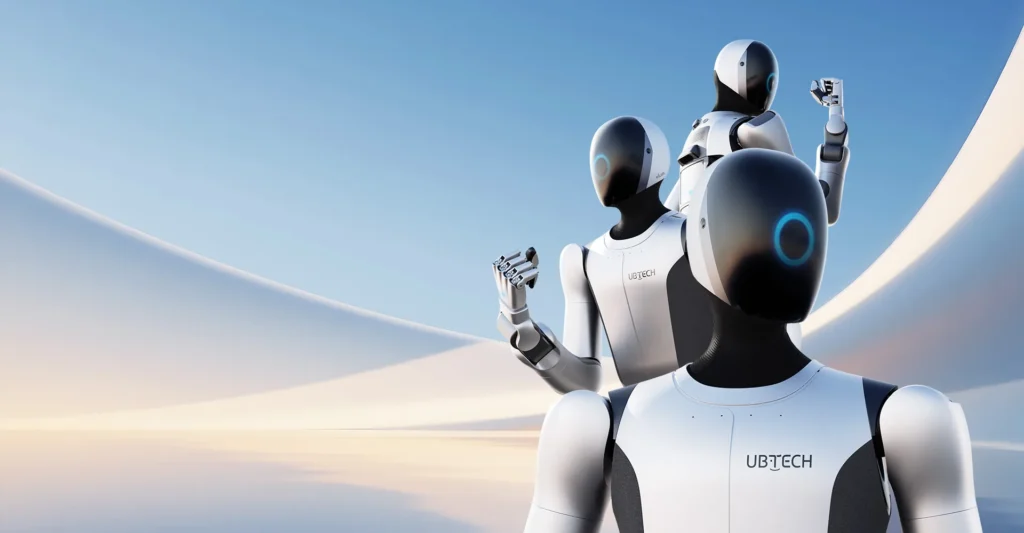
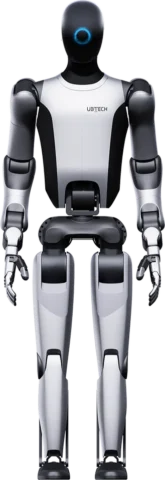
- Single-hand grasp load (kg or g): The weight one hand can hold in a specific grip posture. For the shipping UBTech Walker S2 (52 DoF in total, price on request for business customers), a UBTech brochure claims a 7.5 kg (16.5 lb) single-hand grasp and a 1 kg (2.2 lb) finger grasp. For the smaller Unitree Dex3-1 hand, which weighs 710 g (1.6 lb), Unitree claims a 500 g (1.1 lb) maximum load on a 5 cm (2 in) round object (Source: Unitree).
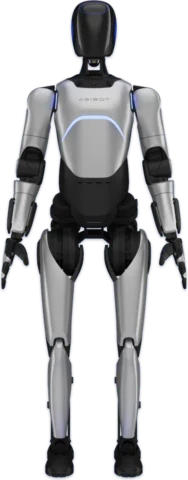
- Arm or dual-arm payload (kg): What the shoulders, elbows and torso can lift structurally, often cradling a box against the forearms rather than hanging it from the fingertips. The Boston Dynamics Atlas spec sheet lists a one-handed lift of 20 kg (44 lb), alongside 50 kg (110 lb) instant and 30 kg (66 lb) sustained two-arm lifts. The ROBOTERA L7 lists a 20 kg (44 lb) dual-arm payload, the UBTech Walker S2 lists a 15 kg (33 lb) two-arm payload, and the AgiBot A2 Ultra (shipping on quote only, 40 DoF in total) lists a maximum arm load of about 2 kg (4.4 lb).
Humanoid robot hands compared
The table below compares the hand specifications of eight current humanoid records from our database. All force, grasp and payload numbers are maker claims unless noted otherwise, and “Not disclosed” marks specs the manufacturer has not published.
| Robot | Fingers per hand | DoF per hand | Drive type | Tactile sensing | Grasp or load figure (N, Nm, kg; maker claims) | Status |
|---|---|---|---|---|---|---|
| 1X NEO | 5 (maker images) | 22 (25 with wrist) | Tendon drive (5:1 to 15:1 gear ratios) | Normal force, contact location, shear | Up to 45 N distal flexion; 2.6 Nm finger MCP; 3.5 Nm thumb CMC | Pre-order ($20,000 Early Access) |
| Boston Dynamics Atlas | 4 (opposable thumb + 3 fingers) | 13 | Direct drive (backdrivable encapsulated actuators) | Dense pressure sensors on fingertips and palm | 20 kg (44 lb) one-handed lift; 30 kg (66 lb) sustained / 50 kg (110 lb) instant two-arm lift | Pilot (price TBA) |
| ROBOTERA L7 (XHAND1) | 5 | 12 active | Direct drive | Tactile arrays on all 5 fingers | 20 kg (44 lb) dual-arm payload | Shipping (price on request) |
| UBTech Walker S2 | 5 (maker images) | 11 | Not disclosed | 6-sensor tactile array | 7.5 kg (16.5 lb) single-hand grasp; 1 kg (2.2 lb) finger grasp; 15 kg (33 lb) two-arm payload | Shipping (price on request) |
| Tesla Optimus Gen 2 | 5 (maker images) | 11 (reported) | Not disclosed | Tactile sensing on each finger (reported) | Not disclosed | Prototype (price TBA) |
| AgiBot A2 Ultra | 5 (maker images) | 6 | Not disclosed | Not disclosed | About 2 kg (4.4 lb) max arm load | Shipping (quote only) |
| Unitree G1 EDU (with optional Dex3-1) | 3 (thumb, index, middle) | 7 | 6 direct-drive motors + 1 geared motor | 33 tactile sensors per hand | 500 g (1.1 lb) max load on a 5 cm (2 in) round object | Shipping ($43,900 reseller price for EDU Standard without Dex3-1; no Unitree price for Dex3-1) |
| Unitree G1 (base) | None (fixed hand shells) | 0 | None (fixed, non-actuated shell) | None | None | Shipping ($13,500 maker price) |
Match the hand specs to your task:
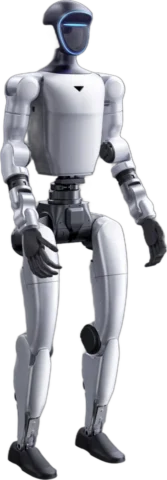
- Research grasping and AI training: University labs testing manipulation policies need software access and tactile feedback. The Unitree G1 EDU, which supports secondary development and takes optional 7-DoF Dex3-1 hands with 33 tactile sensors each, and the ROBOTERA L7 with two 12-DoF XHAND1 hands are the research-oriented options in this guide.
- Factory tote handling and logistics: Moving heavy bins requires high sustained arm payload and impact-tolerant joints rather than 22 finger DoF. The UBTech Walker S2 (mass deliveries began in November 2025) and the ROBOTERA L7 are shipping for industrial pilots, while Boston Dynamics lists 30 kg (66 lb) sustained two-arm lifts for Atlas, which is in pilot deployments; Boston Dynamics has not said which hand customer units carry.
- Home chores and wet environments: Household tasks involve compliant fabrics, glassware and water. The 1X NEO targets this niche with IP68-sealed, 22-DoF tendon-driven hands, though it remains in pre-order.
As reported by The Robot Report from Tesla’s December 2023 video, the Tesla Optimus Gen 2 hands have 11 DoF with tactile sensing on each finger. However, Optimus Gen 2 remains a prototype with no published price, and Bloomberg reported that humans remotely operated Optimus robots at Tesla’s We, Robot event in October 2024.
Bottom line
Always confirm whether dexterous hands are included in the base price or sold as an add-on before requesting a quote.
Unitree Robotics
Unitree G1 EDU
- Height
- 132 cm
- Weight
- 35 kg
- DoF
- 23
- Runtime
- 2 h
ROBOTERA
ROBOTERA L7
- Height
- 171 cm
- Weight
- 65 kg
- DoF
- 55
- Runtime
- —
1X Technologies
1X NEO
- Height
- 168 cm
- Weight
- 29.9 kg
- DoF
- 75
- Runtime
- 4 h
- University and lab buyers: Look at the Unitree G1 EDU with optional 7-DoF Dex3-1 hands for small-object manipulation research, or the ROBOTERA L7 if you need 12 active DoF across five fingers.
- Industrial pilot planners: Focus on shipping models with published two-arm payloads and tactile arrays: UBTech lists 15 kg (33 lb) for the UBTech Walker S2, and ROBOTERA lists 20 kg (44 lb) for the ROBOTERA L7.
- Home early adopters: Track the 1X NEO ($20,000 Early Access pre-order) for its 22-DoF IP68 tendon hands.
To check full-body specifications alongside hand data, compare humanoid robots side by side.
Frequently asked questions
How many degrees of freedom does a robot hand need?
There is no single number of degrees of freedom a robot hand needs; it depends on the task. A 2026 review by Krzus notes the human hand has about 20–27 functional degrees of freedom, which the 1X NEO approaches with 22 actuated finger and palm DoF. Among humanoids in our database that publish a per-hand figure, hands range from 4 to 22 DoF: the Boston Dynamics Atlas uses 13 DoF across four fingers, the UBTech Walker S2 uses 11 DoF, and the Unitree Dex3-1 uses 7 DoF across three fingers.
Why are robot hands so hard to build?
Robot hands are difficult to build because engineers must pack many joints, motors, gears and tactile sensors into a human-sized palm without making the arm too heavy or hot.
Do robot hands have a sense of touch?
Yes, many dexterous robot hands on current humanoids include tactile sensors that detect contact pressure and help prevent slip. The 1X NEO hand senses normal force, contact location and shear force across its fingers. The Boston Dynamics Atlas hand uses dense pressure sensors on its fingertips and palm, the ROBOTERA L7 carries tactile arrays on all five fingers, the UBTech Walker S2 features a 6-sensor tactile array, and the Unitree Dex3-1 packs 33 tactile sensors per hand.
Does the Unitree G1 come with hands?
No, the base Unitree G1 ($13,500 maker price before tax and shipping) has 23 degrees of freedom, none of them in the hands, and ships with fixed, non-actuated hand shells. Even the entry Unitree G1 EDU Standard ($43,900 US distributor RoboStore list price) comes with non-actuated dummy hands. To get working fingers, buyers must order the G1 EDU with the optional 7-DoF, three-fingered Dex3-1 dexterous hands, for which Unitree publishes no standalone price. See our Unitree G1 vs G1 EDU breakdown for details.
Is a robot hand better than a gripper?
A dexterous robot hand is better than a two-finger parallel gripper only when a robot must handle varied tools, round handles or fragile items designed for human fingers. For repetitive picking of uniform boxes or machine parts on a factory line, a simple parallel or vacuum gripper remains cheaper, lighter, easier to program and less likely to break under heavy loads.
Robots in this guide
Live prices and status from our database.
 1X NEO1X Technologies · United States$20,000Official
 Boston Dynamics AtlasBoston Dynamics · United StatesTBANot announced
 ROBOTERA L7ROBOTERA · ChinaOn requestQuote only
 Unitree G1 EDUUnitree Robotics · China$43,900Reseller price
 UBTech Walker S2UBTech Robotics · ChinaOn requestQuote only
 AgiBot A2 UltraAgiBot · ChinaOn requestQuote only
Sources
- Krzus, Human Hand Kinematic Models for Sensor Glove-Based HMI: A Review (Acta Mechanica et Automatica, 2026) reference-global.com
- 1X: NEO's Hands 1x.tech
- Boston Dynamics: Robot Hands for Modern AI and Real Work bostondynamics.com
- Boston Dynamics: Atlas spec sheet (PDF) bostondynamics.com
- ROBOTERA: CES 2026 release (PR Newswire) tools.prnewswire.com
- UBTech: Walker S2 Introduction (PDF) funduinoshop.com
- AgiBot: A2 Ultra product page agibot.com
- Unitree: Dex3-1 unitree.com
- Unitree: G1 unitree.com
- The Robot Report: Tesla demonstrates Optimus Gen 2 dexterity (2023-12-13) therobotreport.com
- Li et al., MM-Hand (arXiv preprint, 2026) arxiv.org